
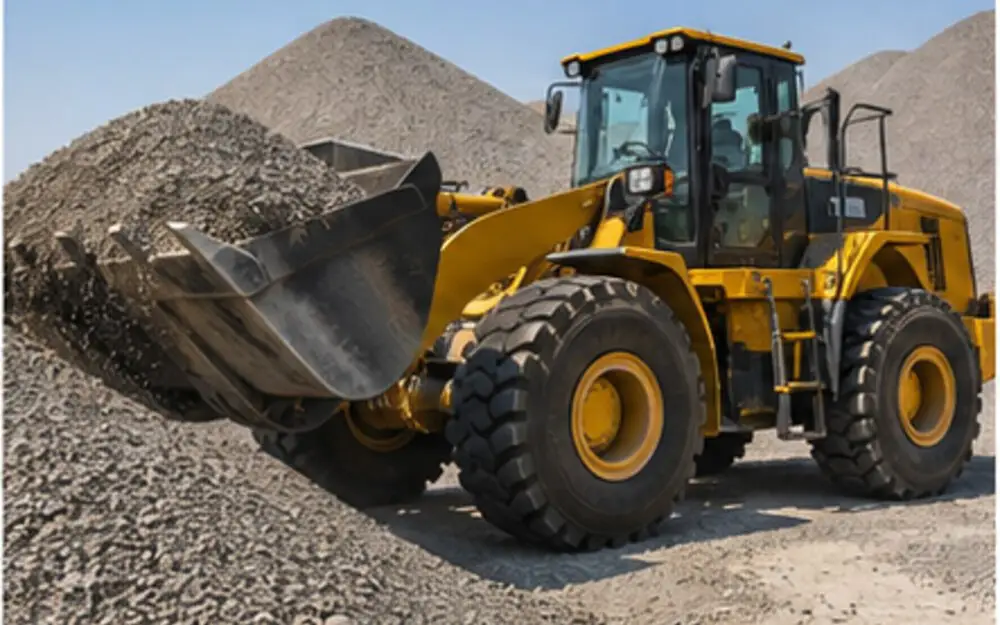
We supply wheel loaders in the CAT 950 and 966 classes. Both load, carry and stockpile bulk material, but the 966 is the larger class, with a heavier machine and bigger buckets. Choosing between them comes down to how much material you move, what you load it into and how much room the machine has. This guide explains the trade-offs.
Start with the daily volume
Estimate how much material must move per day and how far. For steady loading of a moderate number of trucks, or general stockpile work, the 950 class is often enough. For high-volume work, such as loading many trucks from large stockpiles, the larger 966 moves more per cycle and can finish sooner.
Match the loader to the trucks
The loader must reach over the side of the trucks it loads. Larger tippers need more dump height and reach. Tell the team the size of the trucks, and how many will arrive each hour, so the loader and trucks keep pace with each other.
Consider the material
Dense materials such as wet sand, crushed rock and soil fill the bucket’s weight limit faster than light materials. A bucket suited to light material can be oversized for heavy material. Say what the main material is so the bucket can be matched.
Space and ground
Both classes need room to turn and firm ground to work efficiently. The 966 needs more space. On tight sites, or where the ground is soft, a smaller machine may achieve more. Show the working area in photos.
Cost is about output
The larger class costs more per day, but on high-volume work it may need fewer days. For moderate work, the 950 class may be the more economical choice. Compare the time each would need for your job, not only the daily rate. For compact sites and small volumes, a compact loader may be the better fit.
Information to send
Material type, daily volume, distance moved, truck size and number, site photos, ground conditions, whether you need an operator and the dates.