
Bobcat trench backfilling in the UAE is a material-handling job within a site-approved backfilling plan. A compact skid steer can move suitable loose fill from a stockpile and place it where the approved method allows. The site engineer determines the protective surround, fill specification, compaction requirements and the route the machine may use.
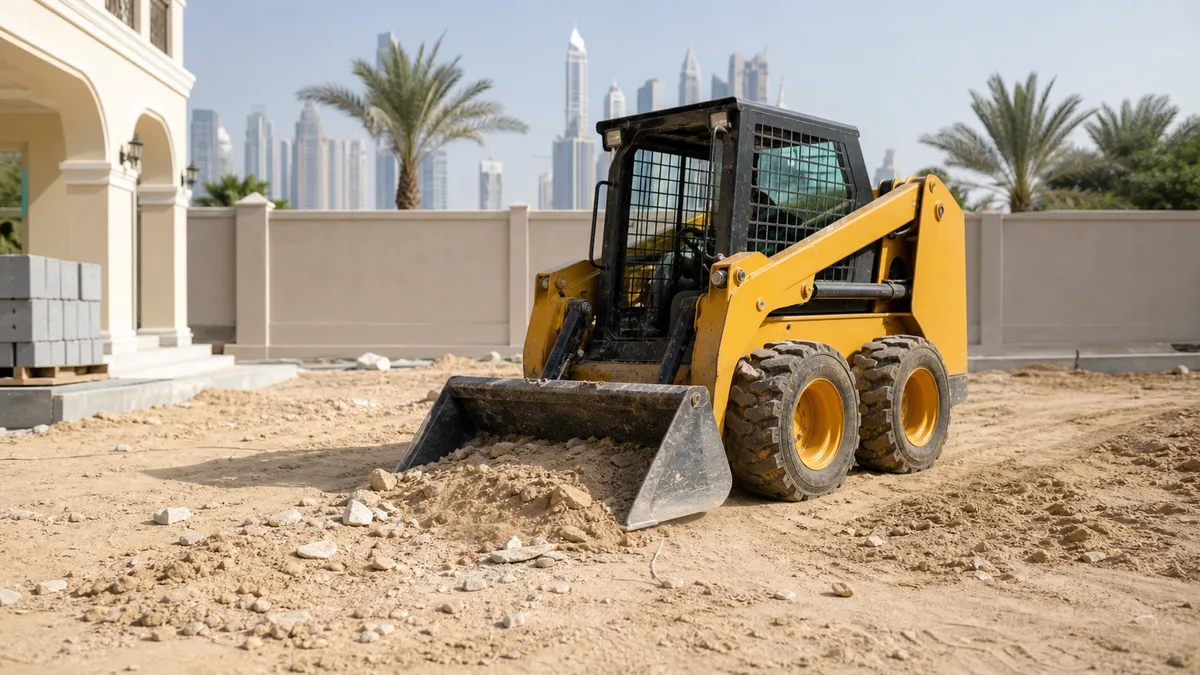
Define the loader’s role before requesting hire
Explain whether you need material brought to the trench, placed into an approved working area, or spread after a section has been released for backfilling. Include the distance from the stockpile and any restricted access. A small site may have enough room for a compact loader but still lack a safe working position beside the excavation.
Digging, placing fill and compacting it are separate parts of the job. If excavation is still required, discuss it through the trenching excavator guide. For the material-handling requirement, see Bobcat rental in Dubai and confirm the proposed machine, attachment and operator arrangements for your site.
Confirm inspections and service protection first
Before agreeing a start date, ask the responsible site team whether the pipe, cable or other installed work has been inspected and released for backfilling. Obtain the approved material and placement requirements, including any areas where machine placement is restricted. Do not assume excavated spoil is acceptable simply because it came from the same trench.
The engineer or relevant service owner should specify how the installation is protected and when machine-assisted work may begin. Give the rental team those constraints with your enquiry. This prevents a booking being based on a scope the site cannot yet release.
Plan access around the excavation
Provide photographs showing the trench, stockpile, entrances, nearby walls and the proposed machine route. Note soft or wet ground, changes in level, overhead restrictions and other site traffic. Keep the material storage area and delivery route within the agreed site plan.
The UK’s Health and Safety Executive excavation guidance explains that machinery loading near an excavation can increase collapse risk. Have the competent site team assess support, ground conditions and the permitted working area before positioning plant. That reference supports the general planning principle; UAE authority requirements and your site’s approved method govern the actual work.
Do not treat a gate measurement as proof that the machine can work beside the trench. Ask the site team to define the working route, exclusion area and any approved crossing. A fixed edge clearance taken from a general article cannot replace that assessment.
Coordinate backfilling and compaction
Confirm who supplies the fill, who places it, who compacts it and who checks the result. The approved specification should determine the material, layer thickness, compaction method and any testing or hold points. Keep these requirements available to the people arranging the loader and the compaction work.
Bucket spreading alone does not show that the fill has achieved the required compaction. Discuss suitable compaction equipment separately, with the trench access and service-protection requirements. Do not assume a roller can reach or is appropriate for every section. Arrange the loader’s attendance around the work that is actually ready, rather than leaving it waiting for inspection, fill delivery or another crew.
Details that make the quotation useful
- Trench and scope: approximate length, width and depth, the section ready for backfilling, and the loader’s intended tasks.
- Fill: approved material, estimated quantity, stockpile location and travel distance, or the expected delivery arrangement.
- Access: entrance dimensions, working-space photographs, ground conditions and the site-approved machine route.
- Coordination: engineer or supervisor contact, inspection status, compaction responsibility and any staged working areas.
- Timing and inclusions: requested dates, expected working hours, operator requirement, delivery/collection and any agreed waiting or extension terms.
Ask for written confirmation of the proposed equipment and what the quote includes. This guide does not set a hire rate, fixed layer thickness, completion time or guaranteed compaction result.
Discuss the equipment and transport requirements
Equipment Rental Enquiries: +971 54 738 8695 or send the trench and access details. UAE Equipment Rental is the equipment-rental division of Emirates Way Cargo L.L.C.
For a separate delivery or cargo movement, see cargo and transport services. Cargo & Transport Enquiries: +971 55 388 5075 or send a cargo enquiry. Confirm the transport and handling scope with the appropriate team.
Official address: Emirates Way Cargo L.L.C., Ras Al Khor, Dubai, United Arab Emirates.
Frequently asked questions
Can a Bobcat do both backfilling and compaction?
A compact loader can handle suitable fill within the approved working method. Bucket spreading does not demonstrate the specified compaction. Confirm the required compaction equipment or attachment, access, testing and responsibilities with the site engineer before booking.
How close can a Bobcat work to a trench?
There is no universal clearance suitable for every trench. Ground conditions, excavation support, nearby structures and machine loading affect the permitted position. The competent site team must define the working area and route for the actual job.
What should I send for a trench-backfilling quote?
Send the location, trench dimensions, photographs, fill quantity and stockpile position, access restrictions and requested dates. Include inspection status, the approved machine route and who will handle compaction, then confirm equipment and quotation inclusions.