
Landscaping work moves a lot of material in small spaces: soil in, rubble out, holes for trees, sand for paving and gravel for paths. A compact loader with the right attachments handles most of this, while protecting what is already built. This guide shows how landscaping contractors and villa owners can plan Bobcat work around a garden or outdoor area.
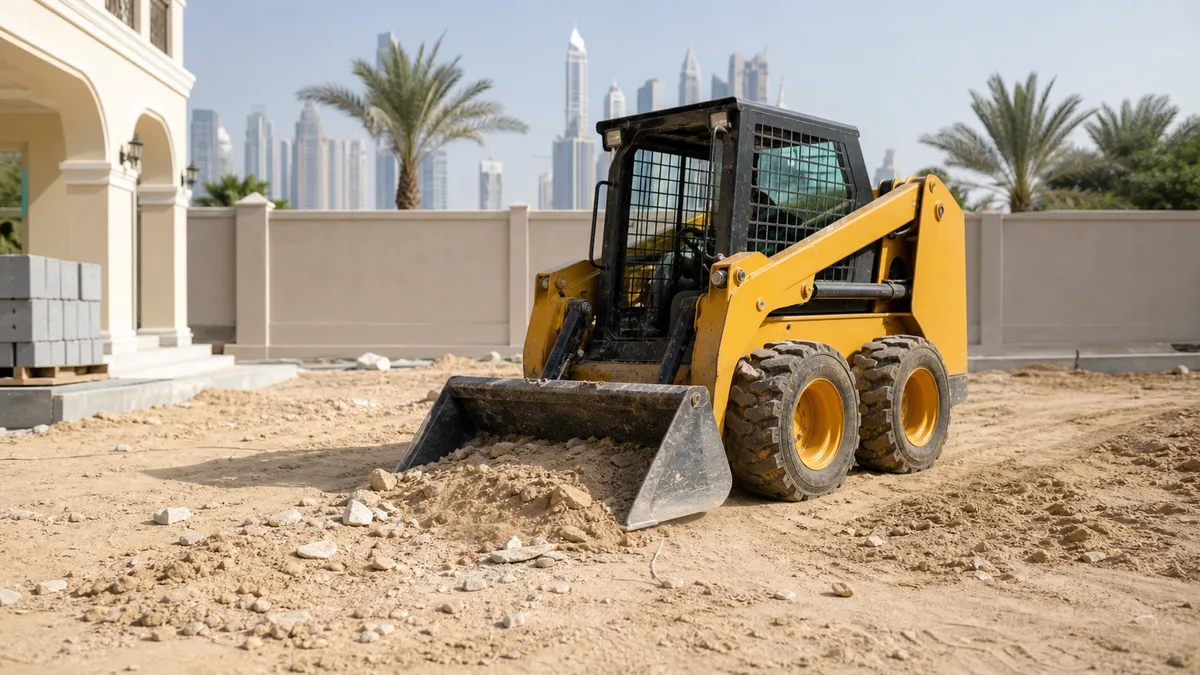
Clearing before planting
Old paving, construction leftovers and poor-quality soil are removed first. The loader gathers and loads this material, then the ground is shaped. Tell the team what is being removed and where it goes.
Bringing in soil and spreading it
Planting soil or sweet soil is usually delivered by tipper. Agree where it will be tipped so the loader can move it into beds and lawn areas with the shortest possible carry. The loader spreads to rough levels; final shaping of beds and lawns is usually done by hand.
Holes for trees and posts
With an auger attachment, the machine drills planting holes and fence-post holes quickly. Give the hole diameter, depth and number, and mark irrigation lines and cables before drilling.
Protect what is already there
Gardens are often landscaped after the villa is finished, so walls, paving, pool edges and irrigation are already in place. Mark the no-go areas, lay boards where the machine must cross finished surfaces, and walk the route with the operator before starting.
Hard landscaping preparation
Paths, driveways and interlock areas need excavation, sub-base and compaction before paving. See the interlock base preparation guide for that part of the work.
Plan the order of work
A typical order is: clear, excavate for paving, bring in sub-base, prepare planting areas, bring in soil, plant, then clean up. Grouping the loader’s tasks into one or two visits saves transport and waiting time.
Details for the quote
Photos of the garden and access, the tasks in order, quantities of soil or material, attachments needed and the preferred dates.