
Excavator hire starts with the task, then the attachment, then the machine size. A wide bucket that suits bulk digging is the wrong tool for a narrow cable trench, and a breaker job needs a machine matched to the hammer. We supply mini excavators and CAT 320 and 330 class excavators for digging, trenching, site preparation, bucket work and breaker work. Here is how to describe your job so the right combination arrives.
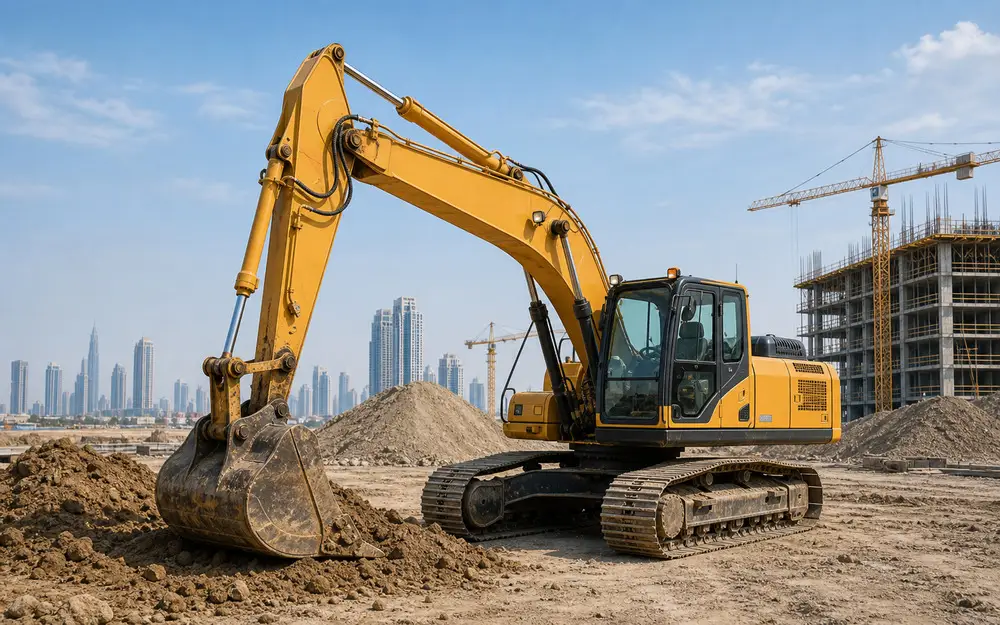
Bulk digging and truck loading: a general-purpose bucket
Foundations, basements, site levelling and loading tippers are bucket work. What matters is the volume to move, how deep you need to dig and where the soil goes. If the excavator is loading trucks, it needs enough reach and dump height to clear the truck’s side, and there must be room for trucks to queue and turn beside it.
Trenches: choose the bucket by trench width
For cable, pipe and drainage trenches, the bucket should be close to the trench width you need. A bucket that is too wide removes extra soil you then have to backfill and compact. Give the trench width, depth and total length, and say whether spoil is stacked beside the trench or taken away. Your site engineer decides whether a trench needs shoring or a stepped side at the planned depth.
Breaking concrete or rock: a hydraulic breaker
Slabs, old foundations, kerbs and rock need a breaker (hammer). Share the thickness of the concrete, whether it is reinforced, the area to be broken and how the broken material will be loaded and removed. Tell the team about noise-restricted hours, nearby occupied buildings and dust control, because they affect how and when breaking can happen. Breaker availability must be confirmed together with the machine.
Matching machine size to access and volume
Mini excavators suit villa plots, inside compounds, gardens and sites with narrow gates or low overhead clearance. CAT 320 and 330 class machines suit open sites, larger volumes, deeper digging and heavier breaking. Measure the gate width and check for overhead lines, soft ground and finished surfaces the tracks must cross.
If the job needs more than one attachment
Many jobs combine breaking and digging: break a slab, then excavate below it. Say so at the start, so both attachments arrive together. Changing plans after the machine is on site usually costs time while a second attachment is arranged.
Before digging starts
Know where underground services run, and have the clearances your project requires in place before excavation. Mark the dig area, and agree where the machine will stand and where spoil will go. Photos of the area and any available drawings help the team confirm the machine size.