
Choosing a forklift by the weight of the heaviest pallet alone is a common way to hire the wrong machine. A forklift’s rated capacity applies at a stated load centre and lift height, and longer loads, higher stacking and attachments all reduce what it can lift safely. We rent forklifts in 3, 5, 7, 10, 15 and 25 ton classes, with standard and container masts. This guide shows how to narrow the choice before you ask for a quote.
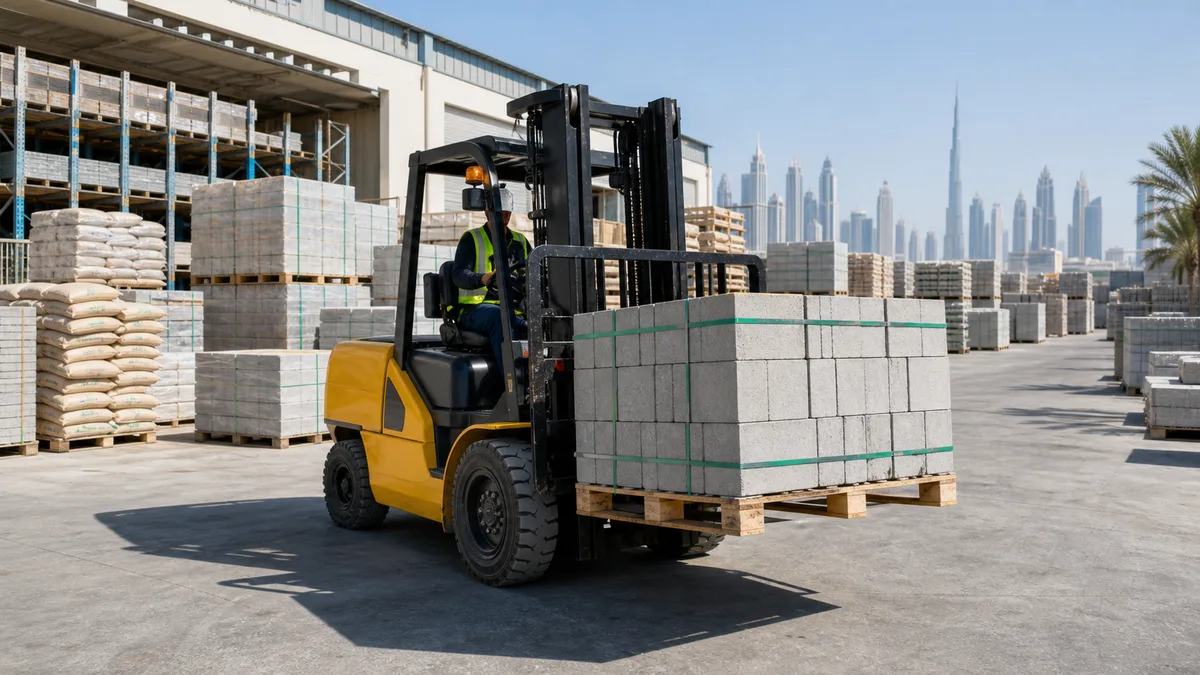
Start with the heaviest load and its shape
Write down the weight of the heaviest single load, including its pallet or crate, and measure its length, width and height. Note whether the weight is evenly spread. A machine part, a generator or a crate with heavy contents at one end behaves differently from a uniform pallet of blocks of the same weight.
Read capacity from the data plate, not the class name
Every forklift carries a capacity plate stating how much it can lift at a specific load centre, the distance from the fork face to the load’s centre of gravity, and up to a stated height. When a load is longer than standard, or its weight sits further out, the safe capacity falls below the headline figure. The same applies when lifting to the top of the mast or fitting an attachment such as a side-shift or fork extensions. Ask the supplier to confirm capacity for your actual load dimensions and lift height, not just the class.
Match the mast to height and headroom
Two heights matter. The lift height is how high the load must go: the top rack beam, a mezzanine edge or a truck bed. The lowered mast height is whether the forklift fits through doors, under ceilings or into a container. Loading or unloading inside a shipping container needs a container mast, which is short when lowered but still lifts the forks without raising the mast.
Check the floor and the space
Smaller forklifts usually run on solid tyres suited to smooth concrete floors. Yards with uneven, sandy or unpaved ground need a heavier machine and suitable tyres, and should be checked before booking. Heavy forklifts put high loads on slabs, ramps and mezzanines, so confirm what the floor can carry. Measure the narrowest aisle and the space needed to turn with a load.
Using the capacity classes as a starting point
- 3 ton: standard pallets in warehouses, shops and light industrial units.
- 5 and 7 ton: heavier palletised materials, blocks, bagged goods and steel bundles in yards.
- 10 and 15 ton: heavy machinery parts, long steel and precast items, where load size and centre of gravity need checking.
- 25 ton: the heaviest single items in the range; share dimensions and photos so the lift can be planned first.
These are starting points, not a substitute for checking the capacity plate against your load.
What to send for an accurate quote
Send the heaviest load’s weight and dimensions with a photo, the required lift height, whether the work is indoors, outdoors or inside containers, the floor or ground surface, the site location, the expected duration, and whether you need an operator.