
There is no single best machine for cleaning a construction site. The right choice depends on what is left on the ground, how much of it there is, how much space the machine has and where the waste goes. This guide matches common clean-up jobs to the machine that usually handles them best.
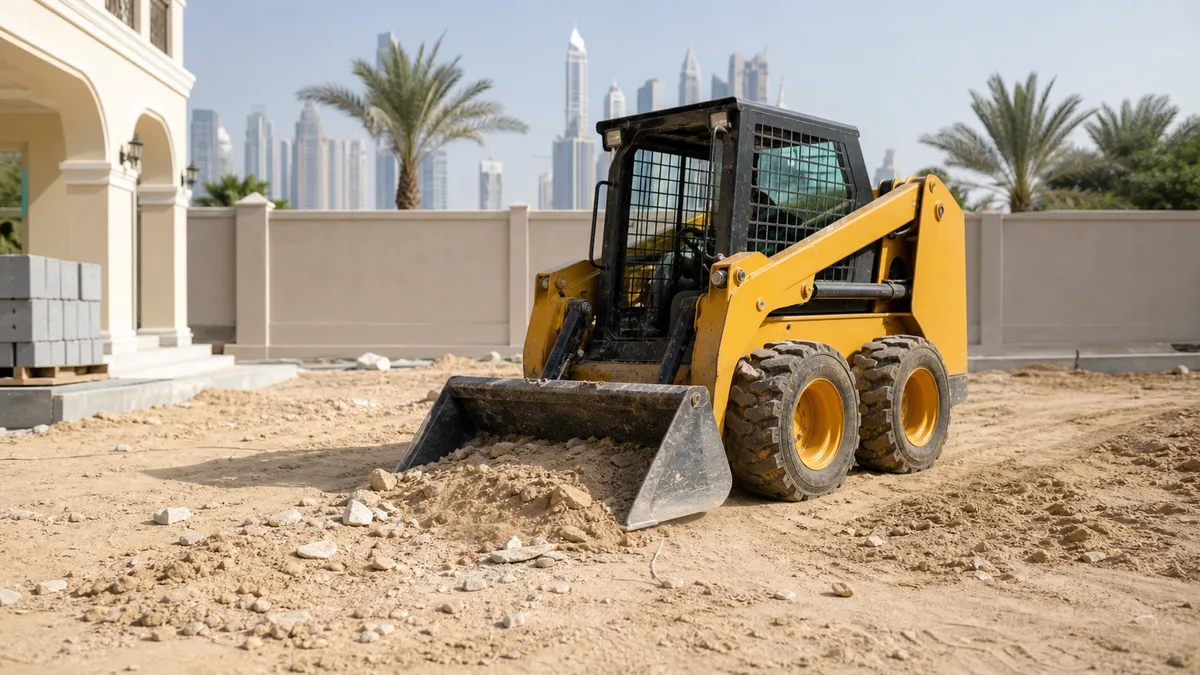
Mixed rubble on a small or medium site: compact loader
Offcuts, broken blocks, packaging and sand spread around a villa or small building are typical Bobcat work. A compact loader works between structures, gathers the debris into piles and loads skips or tippers. With a broom attachment it can also sweep paved areas afterwards.
Large volumes over open ground: wheel loader
When there are large heaps of soil or rubble on an open site and many truckloads to fill, a wheel loader moves far more per bucket and travels faster. It needs space to turn and firm ground.
Heavy demolition debris: excavator
Broken slabs, foundations and large concrete pieces are better handled by an excavator, which can break oversize pieces with a breaker, sort material and load trucks from a fixed position.
Dust and fine sand on finished surfaces: broom
After the heavy material has gone, a broom attachment clears the fine layer that a bucket leaves behind on roads, driveways and yards. For interiors and delicate finishes, manual cleaning is often more appropriate.
Where the waste goes decides the pace
The loading machine is only as fast as the trucks or skips it fills. Book enough skips or tippers, arrange their timing and plan where they stand. Keep recyclable materials and general waste apart if your disposal arrangements require it.
Quick way to choose
- Small site, tight spaces, mixed debris: compact loader.
- Big heaps, open ground, many trucks: wheel loader.
- Concrete pieces, slabs, heavy demolition: excavator with a breaker or bucket.
- Fine dust on paved areas: broom attachment.
If you are unsure, send photos of the site and the debris, and the team can suggest the combination.