
Before booking a Bobcat, trace the route from the transport vehicle's stopping point to the exact work area. A machine fitting through the gate does not prove that it can be unloaded, turn, work and leave safely.
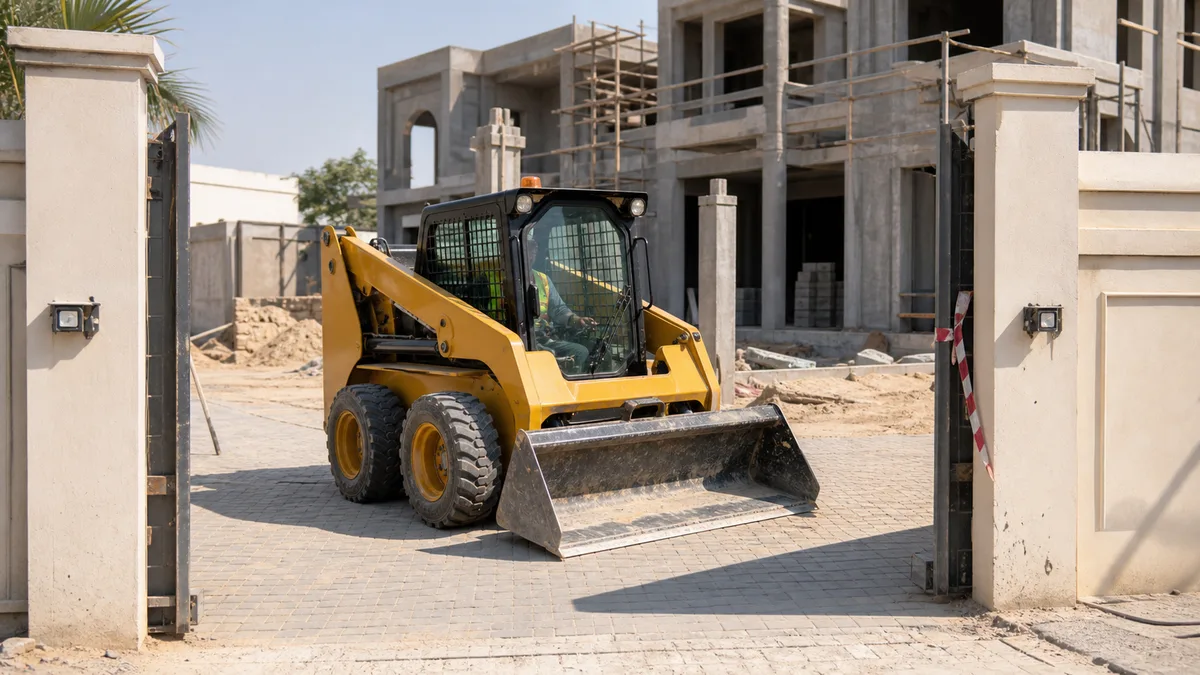
1. Mark the delivery and unloading area
Send a map pin and a photo taken from the road toward the entrance. Show where the transport vehicle can stop and where the Bobcat would be unloaded. Note a narrow road, loading restrictions, parked vehicles, overhead cables or a gate that opens only at set times. Ask the rental team to check the proposed unloading arrangement before a delivery time is agreed.
2. Measure the narrowest part of the route
Measure the clear opening with the gate fully open, then check each pinch point between the entrance and the work area. Photograph corners, columns, low beams, steps and any temporary fencing. Include the space needed to turn, not just the straight-line width. The required clearance depends on the actual machine and attachment offered; do not rely on a model photo or an assumed Bobcat width.
3. Describe the ground and the work area
Identify loose fill, slopes, wet ground, covers, trenches, edges and finished surfaces that need protection. Show where material will be collected and deposited, and where the machine can manoeuvre without entering a pedestrian route. The site supervisor should assess ground bearing and any protected services; a photograph alone cannot establish that an area can carry the machine.
4. Check access at both ends of the booking
Confirm who will open the gate, receive the driver and guide the machine on site. If a pass, induction or site approval is required, arrange it before dispatch. Recheck the collection route for the end of the job: stockpiles, other vehicles or temporary works may block the space that was clear on arrival.
Send one useful access brief
Copy these fields into your enquiry: site pin and entrance photo; unloading position; smallest measured opening and any overhead limit; photos of turns and work area; ground or surface concerns; task and material; preferred work date and expected duration; receiving person's contact. The equipment team can then compare your site with a proposed Bobcat and attachment and ask for any missing measurements. If a route is uncertain, keep the booking conditional until the supplier and site supervisor have checked it.