
A villa build needs a compact loader at several points, not just at the start. Knowing when those points come lets you book the machine for the right days instead of calling at the last minute. This guide walks through the stages of a typical villa project where a Bobcat earns its place.
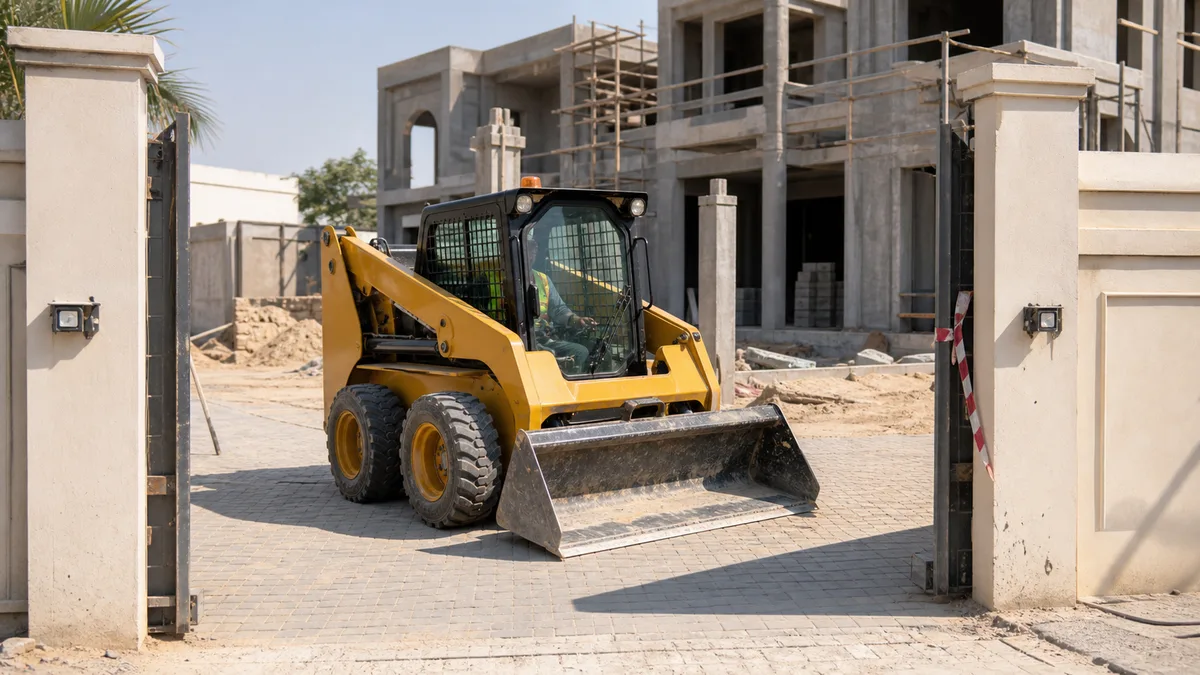
1. Clearing the plot
Before setting out, the plot is cleared of loose debris, vegetation and leftover material. A compact loader gathers and loads this material, and levels the surface roughly for the surveyor. This is usually the easiest stage for access, because nothing has been built yet.
2. Backfilling around foundations
Once foundations and below-ground works are complete, the spaces around them are filled. A compact loader moves fill material close to the excavation and places it in layers for compaction. The site engineer specifies the fill material and layer thickness; the loader moves and places it.
3. Moving materials during construction
Sand, aggregate and blocks are delivered to a gate and are needed elsewhere on the plot. With forks or a bucket, a loader moves them to where masons and other trades are working, over short distances on firm ground.
4. Clean-up before finishing works
Before tiling, paving and landscaping, the site must be cleared of construction debris. This stage is often tighter, because boundary walls, gates and parts of the building are finished. Measure access again: a gate or passage that was open during clearing may now be narrower.
5. Preparing for paving and landscaping
Before interlock or landscaping, the ground is shaped, fill is spread and the base is prepared. See the interlock base preparation guide for that stage in detail.
Protect finished work at later stages
From stage 4 onwards, mark finished walls, tiles and service boxes, and lay boards where the machine must cross finished surfaces. Tell the operator which areas are out of bounds.
What to send at each stage
The stage of the project, the task, the material and rough quantity, photos of the gate and work area, where the material goes and the preferred dates.