
A compact loader is good at ground levelling: spreading fill, removing high spots and leaving a surface that is roughly even and ready for the next stage. It is not a precision grading machine. This guide explains what site levelling with a Bobcat can achieve on a Dubai plot, how to prepare the levels, and when compaction or a larger machine is needed.
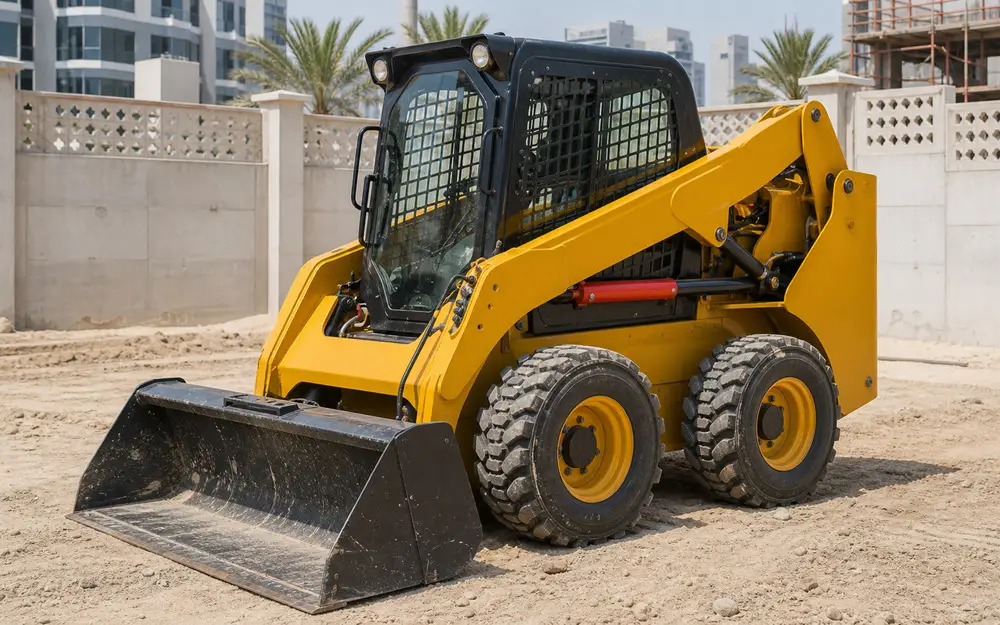
Rough grading versus finished level
Rough grading brings the ground close to the required height by spreading and back-dragging material with the bucket. The finished level, the exact height needed under paving, slabs or artificial grass, is set by the trade responsible, often with string lines, pegs or a laser level, and then compacted. Book the Bobcat for the first stage and plan the second.
Set the target levels before the machine arrives
The operator needs something to work to. Have the surveyor or site engineer set pegs or marks showing the required levels, the falls for drainage and any areas that must stay untouched. Without reference points, “make it level” is open to interpretation.
Add, remove or redistribute material
Say whether the job only needs existing material moved around, or whether fill must be brought in or surplus taken away. The CAT 226B we supply carries up to 680 kg per load, so heavy or damp fill moves in many short trips. If fill is arriving, agree its delivery time and where it is tipped, so the loader can spread it from a convenient point. The sand shifting guide covers moving and loading sand in more detail.
Compaction is a separate step
A loader spreading loose material does not compact it to the density needed under paving or structures. Plan compaction in layers, as the site engineer specifies. For open areas, our 10–12 ton roller compactor can follow the levelling; narrow strips beside walls need smaller compaction equipment such as a plate compactor, which we do not supply. The soil compaction guide explains layers, moisture and testing.
Check the edges
Levelling next to walls, kerbs, pipes or planted areas needs care. Mark anything that must not be disturbed, and expect the areas closest to walls to be finished by hand.
When a larger machine is faster
On large plots, or where a lot of material must be cut and moved across open ground, a wheel loader moves far more per bucket. See wheel loader rental for the 950 and 966 classes. Many sites use both: the wheel loader for the bulk and the Bobcat for tight areas and final rough levels.
Send these details for a levelling quote
- the area size and the approximate depth of material to move;
- whether fill comes in or surplus goes out;
- whether the levels are already marked;
- photos of the area and its edges;
- the next stage of work, such as paving, turf or a slab.
Send them to Equipment Rental Enquiries on +971 54 738 8695 by phone or WhatsApp, or use the equipment enquiry form. For booking, see Bobcat rental in Dubai; for related work, the interlock base guide and the trench backfilling guide.
Frequently Asked Questions
Can a Bobcat level ground for paving or artificial grass?
It can spread the base material and prepare the rough level. The final level is set by the paving or turf trade and compacted before they lay the surface.
Does the Bobcat compact the ground?
No. Driving over loose fill does not compact it to the density needed under paving or structures. Compaction is done in layers with a roller or plate compactor.
Who sets the levels the operator works to?
Usually the surveyor or site engineer, with pegs or marks for the required heights and drainage falls. Send photos of the marks with your enquiry.