
A delivery is only finished when the goods are off the truck and in the right place. Loading and unloading are where delays, damage and disputes most often happen, usually because nobody agreed in advance who does what. This guide covers how to plan both ends of a cargo movement.
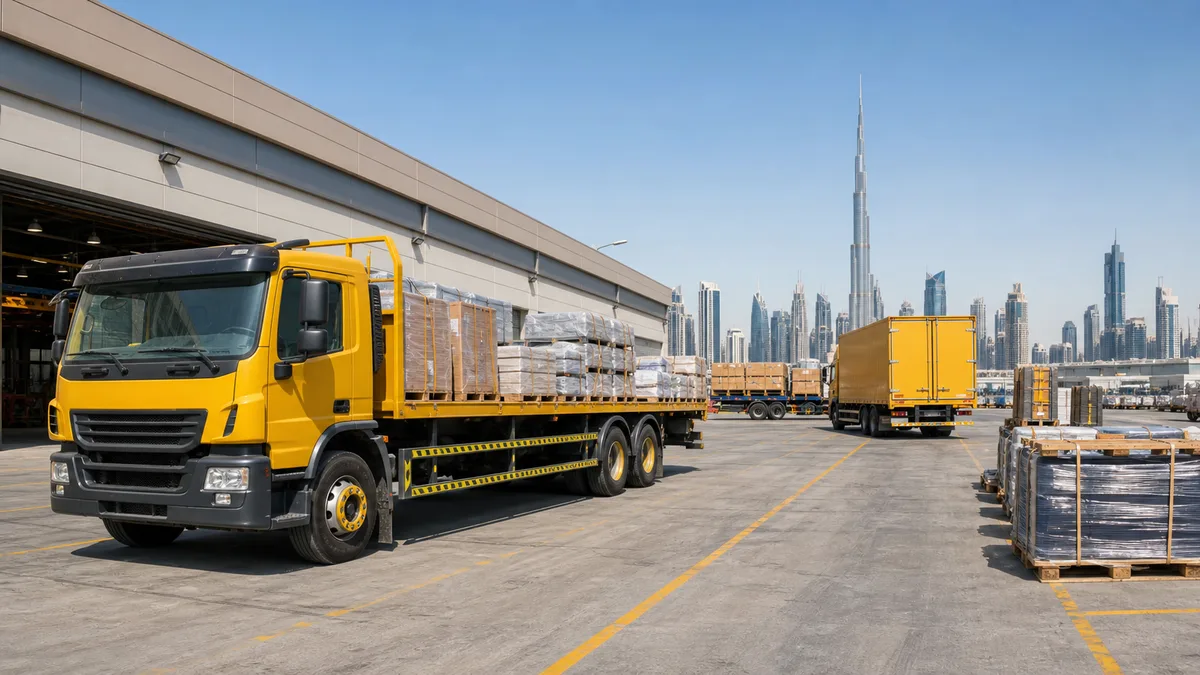
Decide who loads and who unloads
For each end of the trip, agree whether the sender, the receiver or the transport team provides the people and equipment to load and unload. A driver alone cannot unload heavy pallets. If helpers are needed, book them with the truck.
Match the method to the goods
- Loose boxes and light items: loaded by hand, which takes time for large quantities.
- Pallets: a forklift or pallet jack at both ends, and a truck that can be loaded from the side or rear.
- Heavy single items and machinery: a forklift of the right capacity or a crane. See forklift rental or mobile crane rental if the site does not have one.
Loading dock or ground level?
At a dock, the truck backs up to the dock height and goods move straight across. At ground level, goods must be lifted from the truck bed, which needs a forklift, a tail-lift or manual handling. Tell the team which applies at each end.
Access and timing
Check where the truck can stand while loading, whether a loading bay must be booked, and whether the site has fixed receiving hours. A truck that arrives outside those hours may wait or be turned away.
Count, check and record
Count the pieces at loading, note any existing damage and take photos. At delivery, the receiver counts again and signs. If something is wrong, note it on the delivery document before signing.
Information to send
Goods description, number of pieces, weight and dimensions, packaging (pallets, boxes, loose), loading method at each end, pickup and delivery pins, receiving hours and contacts.